
How Leading Brand Marketshare Evolves Over Time
Late last week, we launched a new visualization on competitive dynamics in the Spirits RTD category (available at thirstyinsights.com/resources). A snapshot is below:
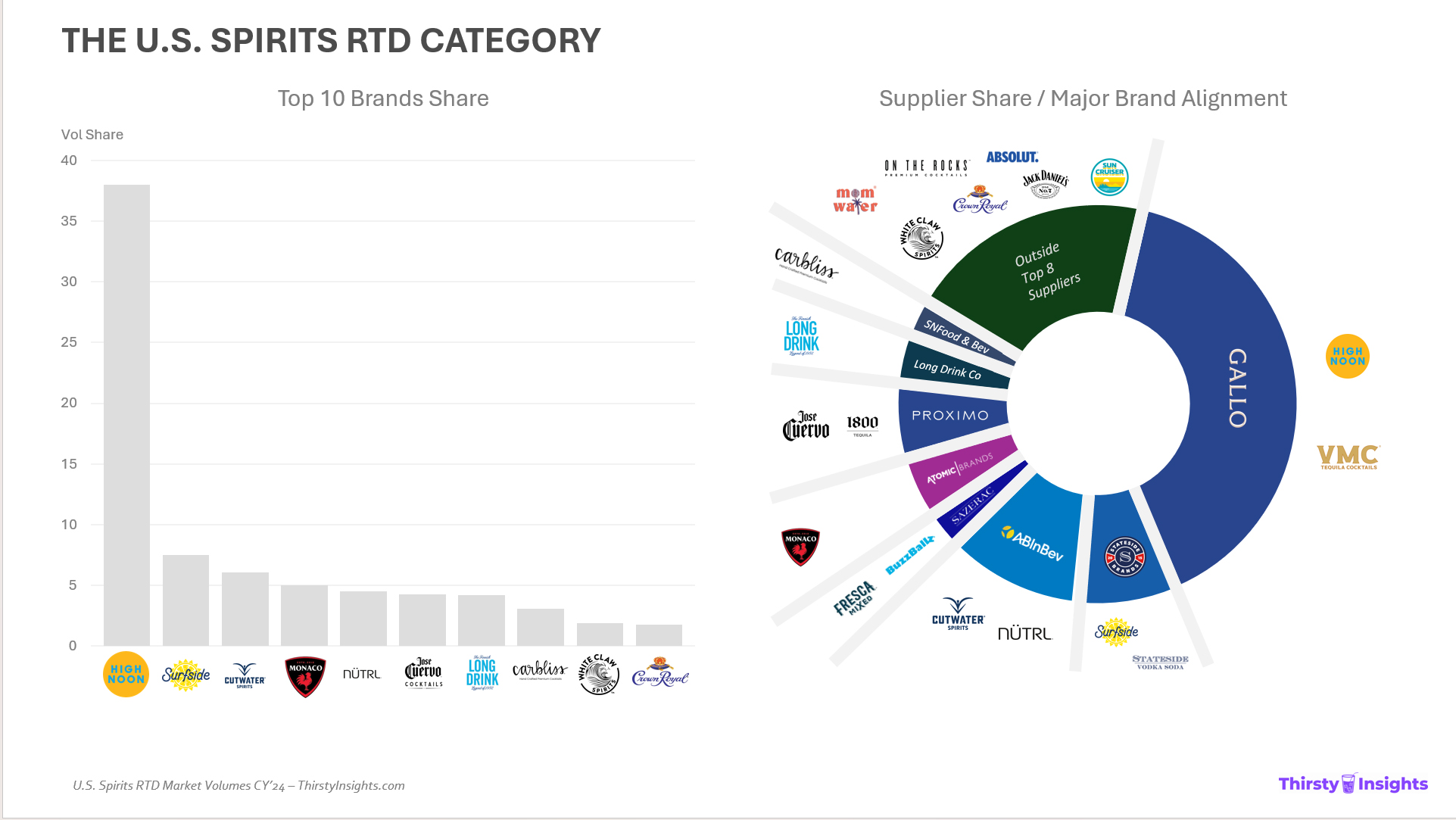
The surprise? High Noon commands nearly 40% market share, a level of dominance that's fairly rare in beverage alcohol. A #1 brand holding 40% of a category only happens once or twice a decade, typically in rapidly emerging segments.
So we asked ourselves: Is this sustainable? We analyzed the three most recent "boom" categories to find out.

A few reflections on the data:
Rapid growth attracts rapid competition. All these categories saw major competitive entrants within 12-18 months of the incumbent's initial success. As newcomers flooded in, the leading brand's market share consistently declined 10-20% by year 3-4.
But the story doesn't end there. In Malt Seltzer and Flavored Whiskey, the lead brand eventually regained share as category growth slowed and the industry consolidated around fewer players.
Our 2025 prediction: High Noon's market share will drop to the low 30s by year-end, mirroring White Claw's trajectory in 2021 almost perfectly.
The bottom line: Past performance doesn't guarantee future trends, but it gives us a roadmap for how today's emerging categories (Spirits RTD, NA Beer, THC beverages, etc.) might evolve.
Author

Matt is an experienced Beverage Alcohol Consultant who helps emerging beverage alcohol brands with growth strategy, M&A diligence, consumer insights, and fundraising. He is also an active CPG angel investor.